Osaek-tteok
Rice cakes in the five traditional colors of Korea, the colors of celebration. Shaped the morning they are given.
Handmade Korean confections, composed for the person and the moment that matter.
Discover the CollectionsRice cakes in the five traditional colors of Korea, the colors of celebration. Shaped the morning they are given.
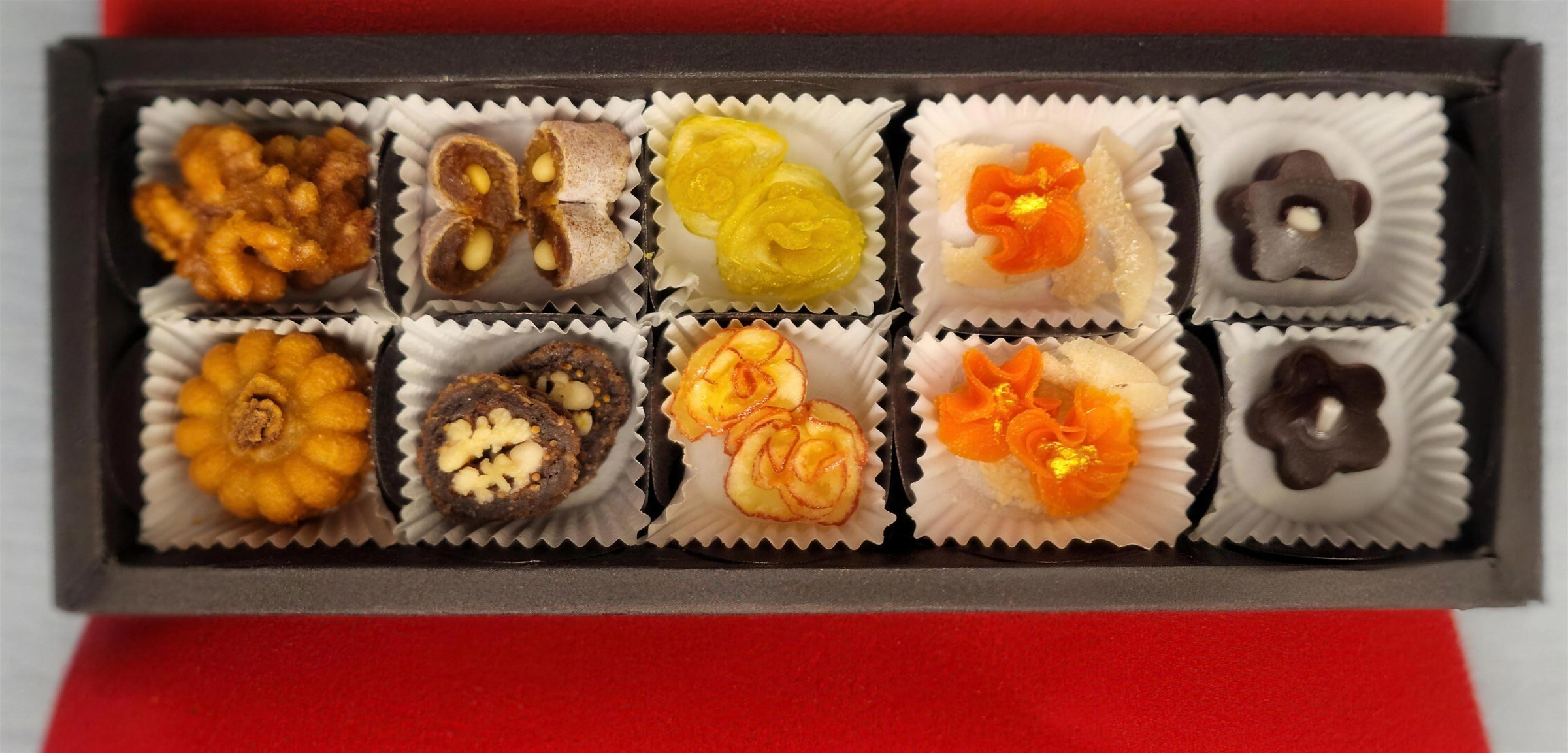
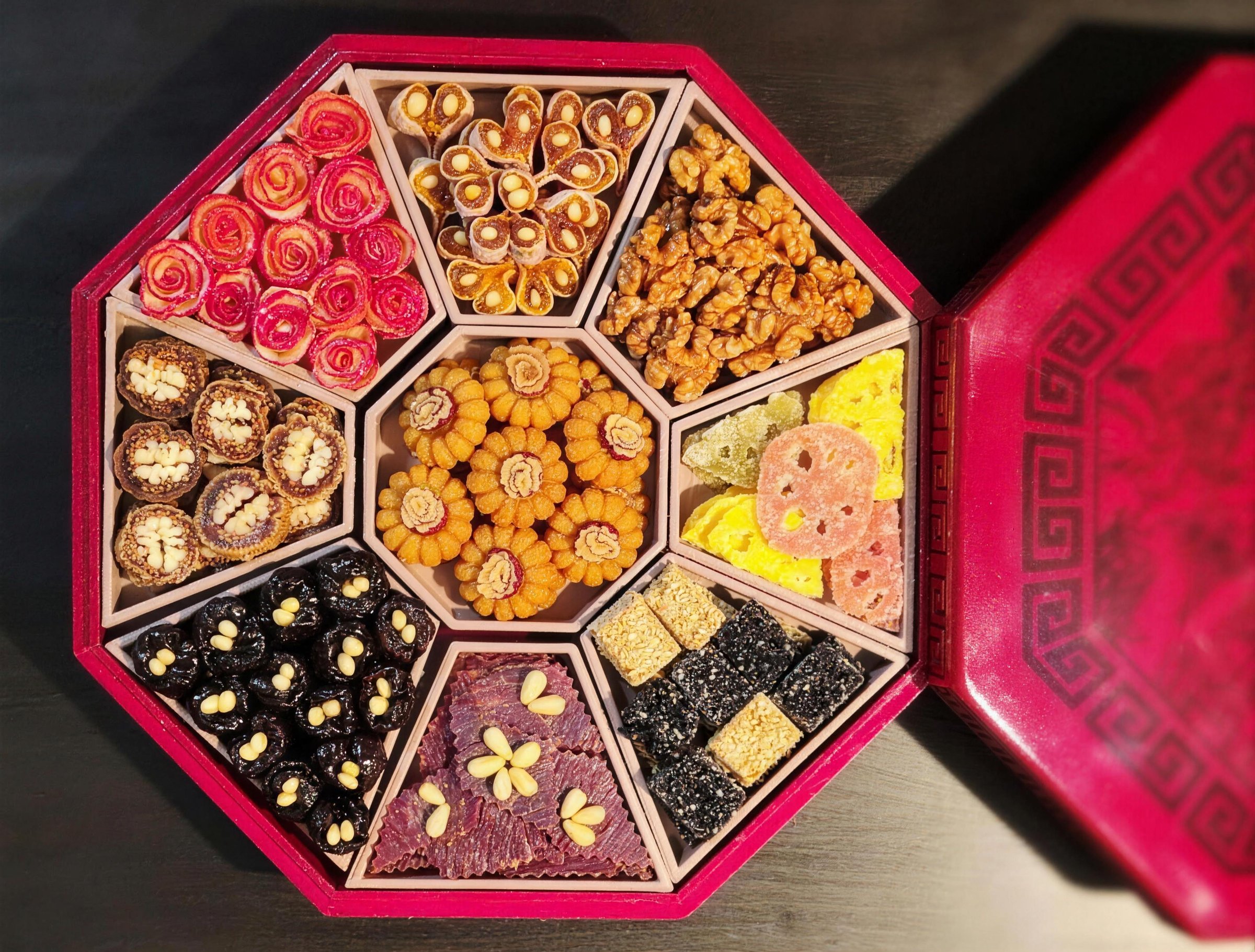
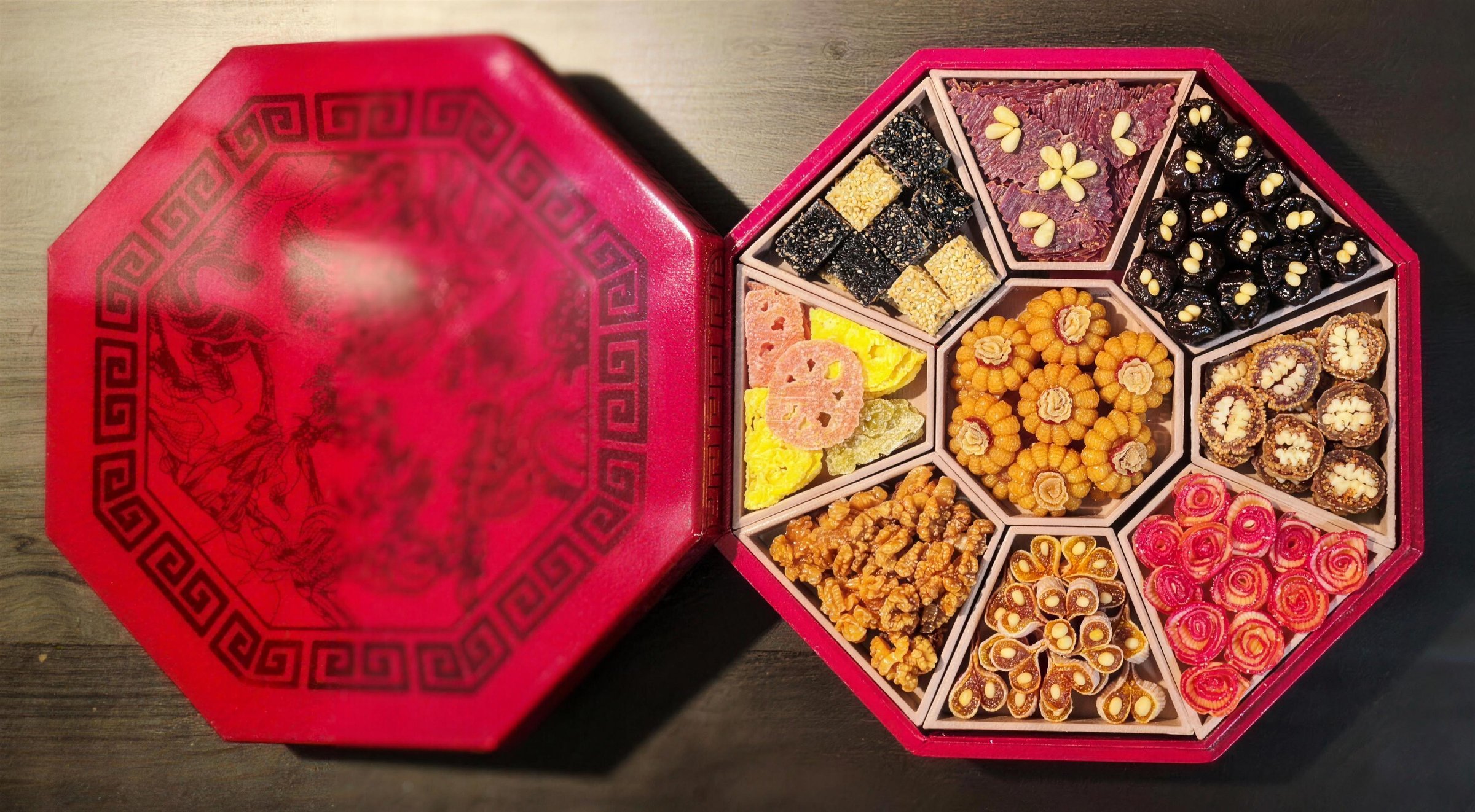
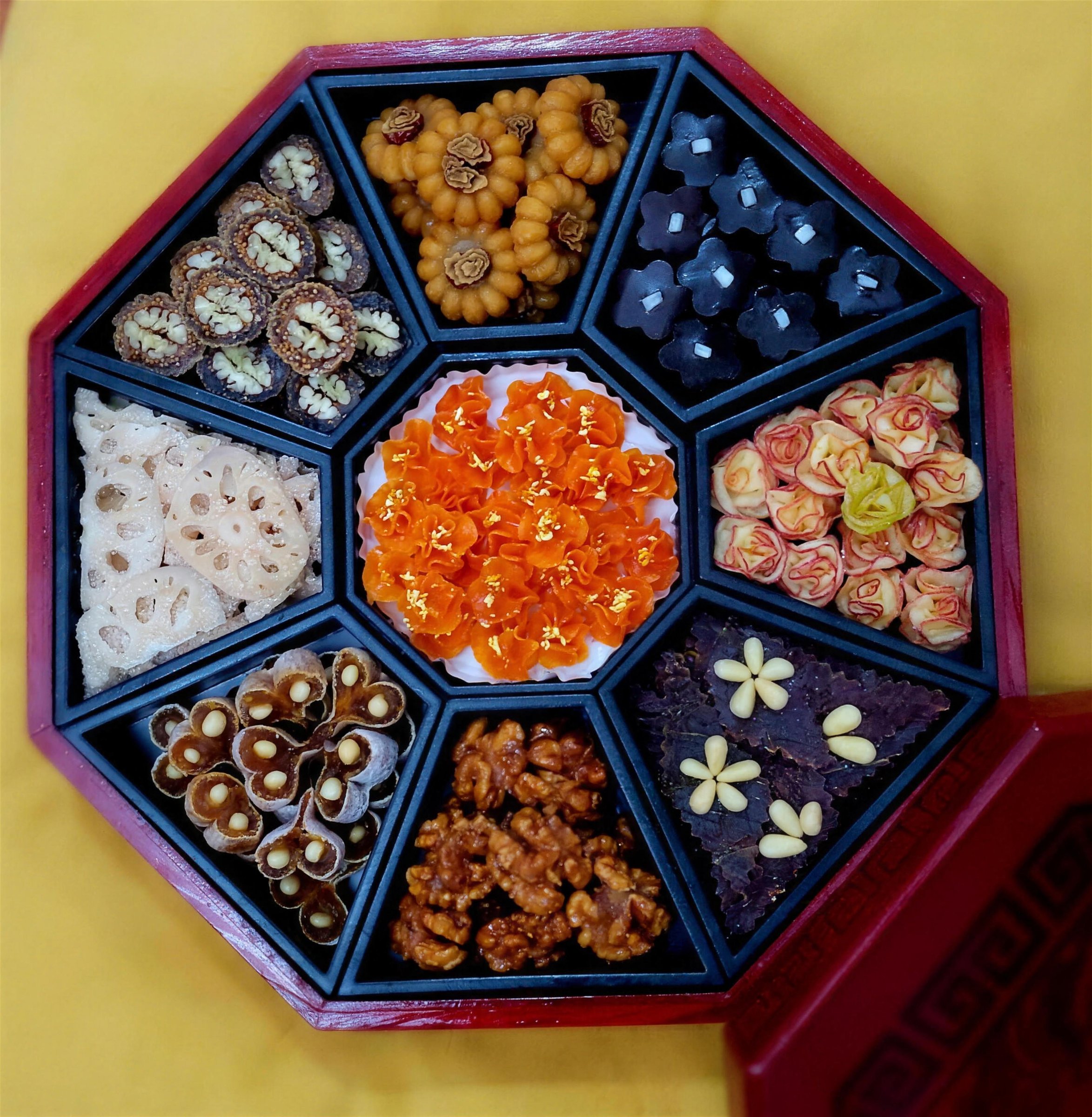
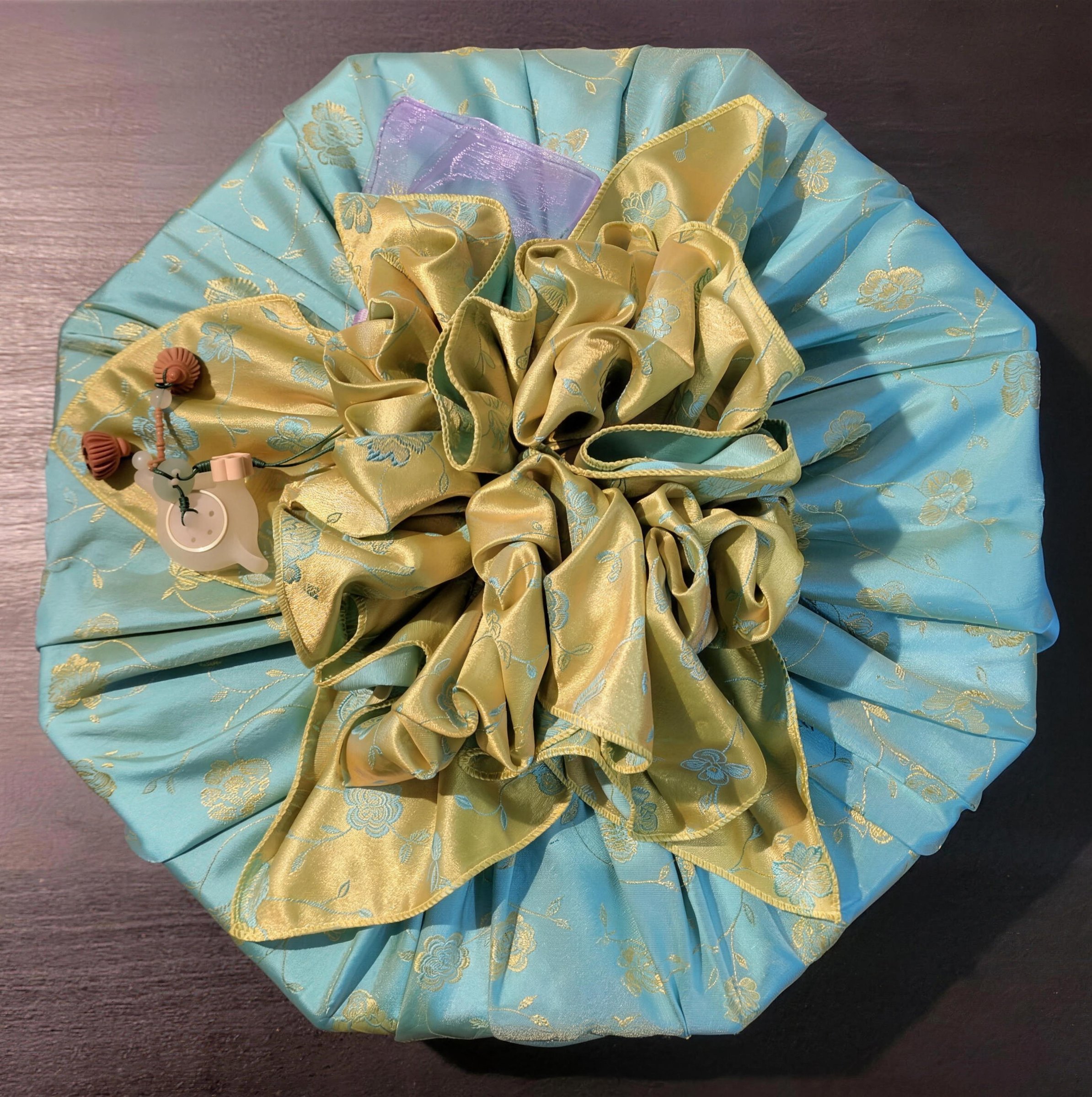
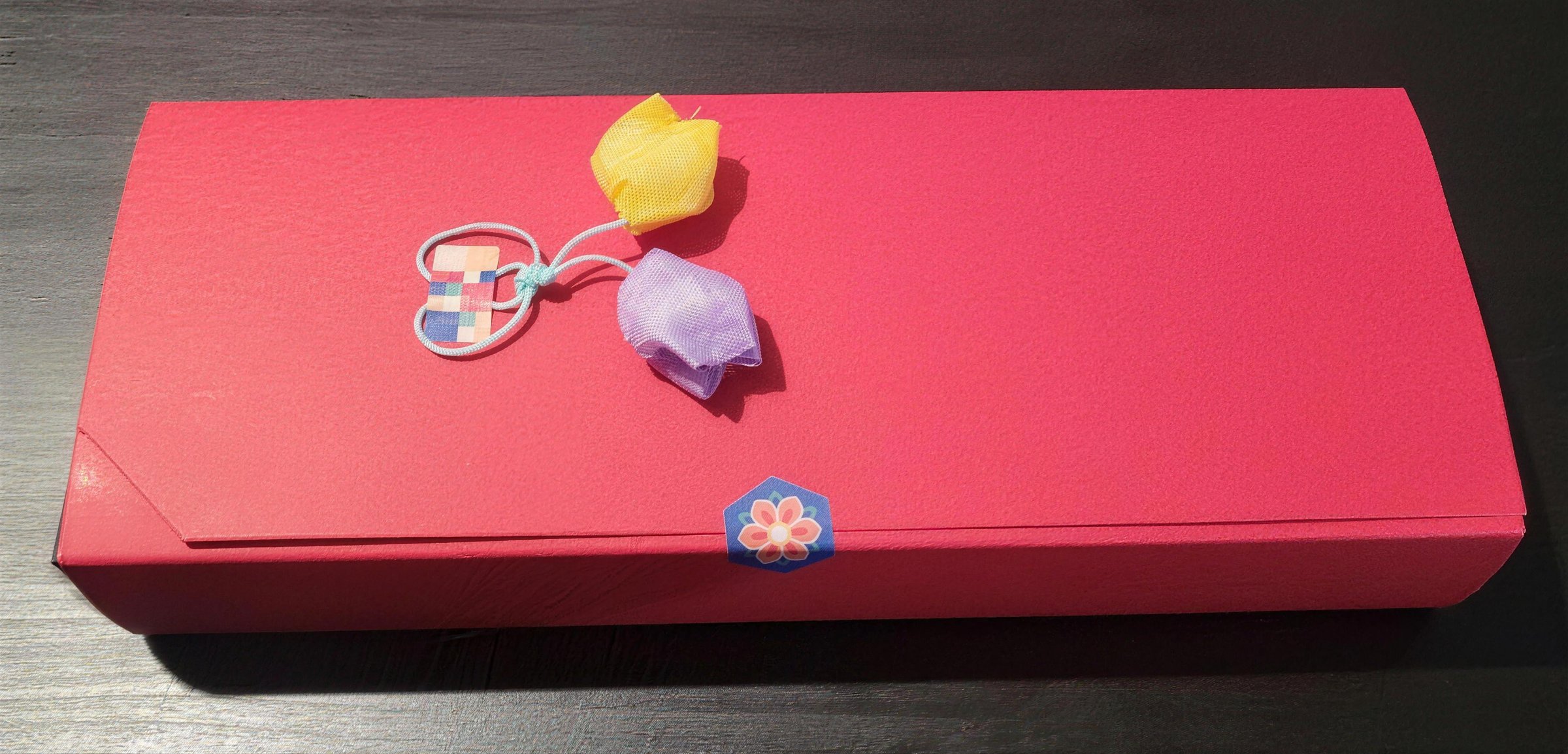
Gold-leaf yakgwa, candied lotus root, persimmon and jujube rolls, presented in a red octagonal lacquer box or wrapped in silk bojagi.


In Korea, food has always spoken. A color, a shape, a single pine nut can carry a wish for the person who receives it. Every box from the Maison is composed around a blessing.
The characters for long life and fortune, pressed into dasik with carved wooden molds. A silk bojagi, tied by hand, is said to wrap good fortune inside.
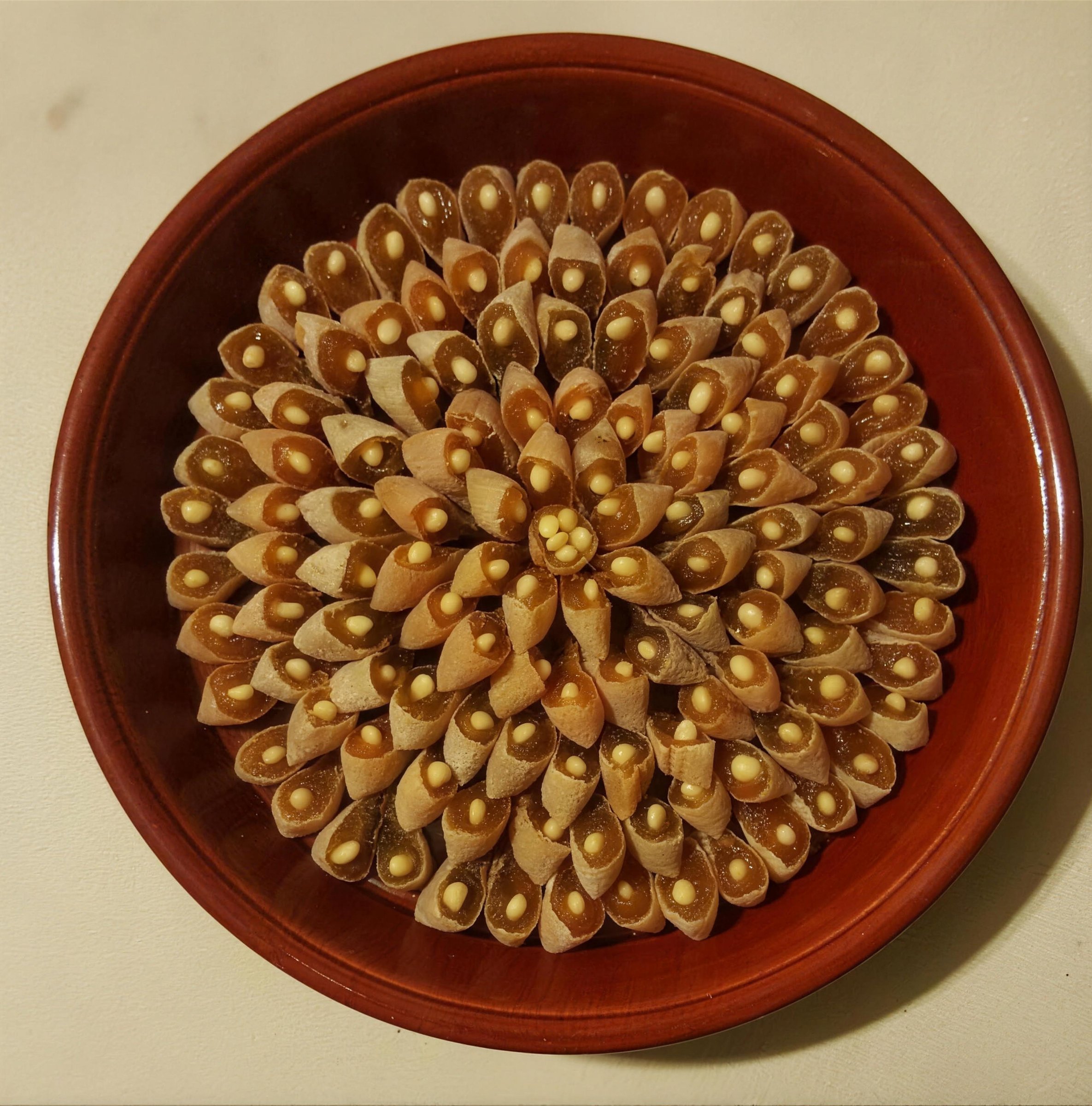
Pine nuts, from the pine, one of Korea's ten symbols of longevity. Honeyed confections are piled high on the sixtieth-birthday table.
Rice cakes sliced round like old coins at the New Year, and rice cake shared with neighbors on the day a business opens.
The lotus, a symbol of purity and nobility, rises clean from the mud. Candied lotus root and gold leaf are set before an honored guest.
At the pyebaek ceremony, the groom's parents toss jujubes and chestnuts for the bride to catch in her skirt, each one a wish for children.
The five colors of obangsaek, held in balance. Rice cake is always made to be shared, with family, with neighbors, with everyone at the table.
Red is the color that wards off misfortune. Red-bean rice cake guards a child's early birthdays and blesses a new home.
Before an exam, Koreans give sticky rice cakes. In Korean, the word for "stick" also means "pass."
Mandarin ducks, a pair for life, are the emblem of a happy marriage. Chewy injeolmi is sent with the bride, so the couple will always hold together.
Fortune and long life for the year ahead, the gift Koreans bring to the elders of the family.
Thanks for the harvest and for the people who made the year abundant.
Jujubes and chestnuts for children, and a wish that the couple will always hold together.
Five colors for a life in harmony, and red to keep the child from harm.
Long life and good health, honoring a parent with the confections of a celebration table.
Protection for the threshold and prosperity for what begins there.
A sweet, sticky wish for success, and a clear mind for the road ahead.
Honor for the recipient and prosperity for the partnership.
For the moments in between, large and small. Each carries a blessing of its own.

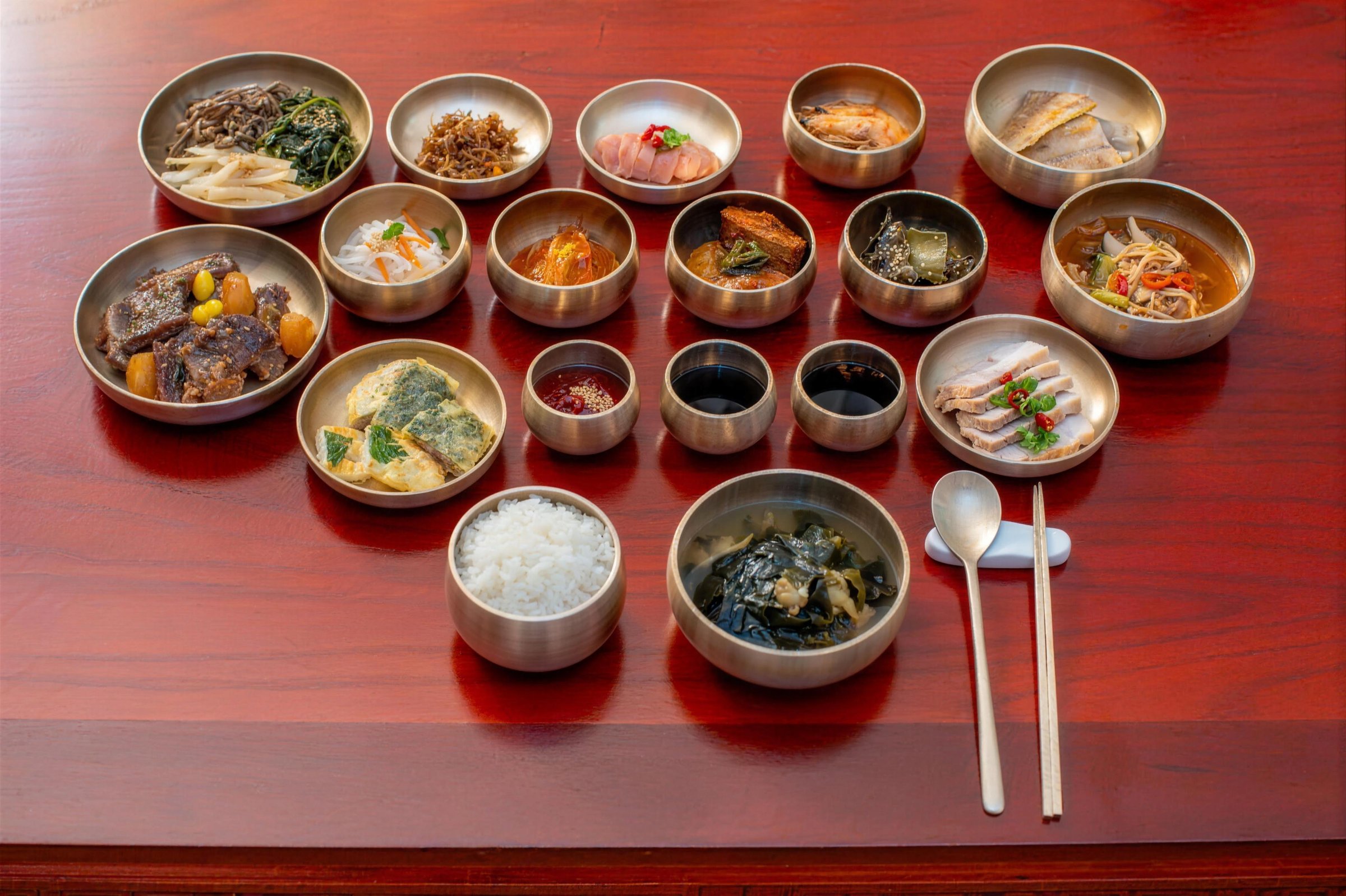
The world has fallen for Korea: its music, its drama, its rituals of beauty. Older than all of them is the refinement of the royal table.
Bojagi silk, mother-of-pearl, hand-beaten brass and the tea ceremony. Centuries of Korean craft, made by hand into a gift for today.

Each box carries its own number, written by hand. No number is ever issued twice.

A card signed by Youngmi Yi accompanies every piece, with the meaning of each confection.

Only a limited number of pieces are made each month. When the allocation is full, reservations open for the next.

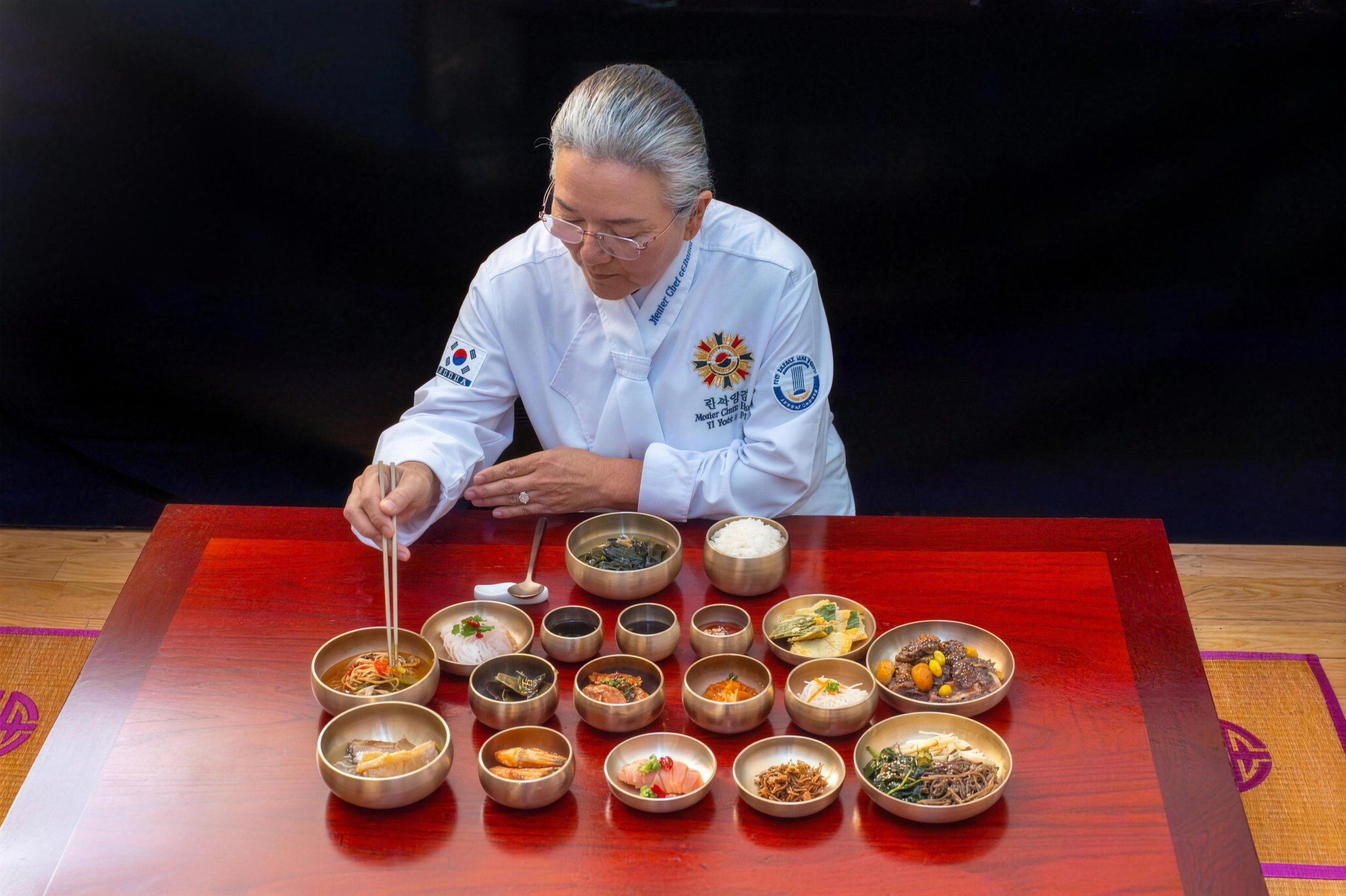
Youngmi Yi has devoted her life to the Korean table: its confections, its teas and the courtesy with which they are served.
In 2026 she was named a Grand Master Chef of Korean Cuisine, in traditional confectionery, by The Korean Food Forum. A practitioner of the Korean tea ceremony, she has presented it at the Korean Cultural Center Los Angeles and at Cal State San Bernardino.

For weddings, galas and diplomatic or corporate gifts, the Master composes each commission personally, after a private consultation.
Request your piece at least two days in advance. For events and larger commissions, we suggest two weeks.
Nothing is made before it is ordered. The Master shapes each piece in the days before it is given.
Hand-delivered across Los Angeles. Osaek-tteok is delivered locally only; hangwa, dagwa and tea may also be shipped.
Tell us about your occasion. Our concierge will reply within one business day with availability and a personal proposal.